What if the foot isn’t the problem?
Many insole and orthotic approaches begin by asking what is wrong with the foot. We begin by examining the environment in which the foot is being asked to perform.
Our working model treats the foot as a dynamic system built to adapt, sense, splay, stabilize and produce force. Footwear and consistently flat manufactured surfaces change that environment—and may change how the foot can express those abilities.
Book your fittingThe shoe changes the environment
Shape, stiffness, heel elevation and internal volume can influence toe splay, pressure distribution and how force travels through the foot.
Flat ground changes the task
Natural terrain varies. Built environments are consistently flat. We look for where a small, precisely placed interface can improve the way you organize pressure and force.
The intervention should be measurable
We establish a baseline, introduce the Kinetic Edge configuration, repeat the relevant test and show you the response before building the full custom product.
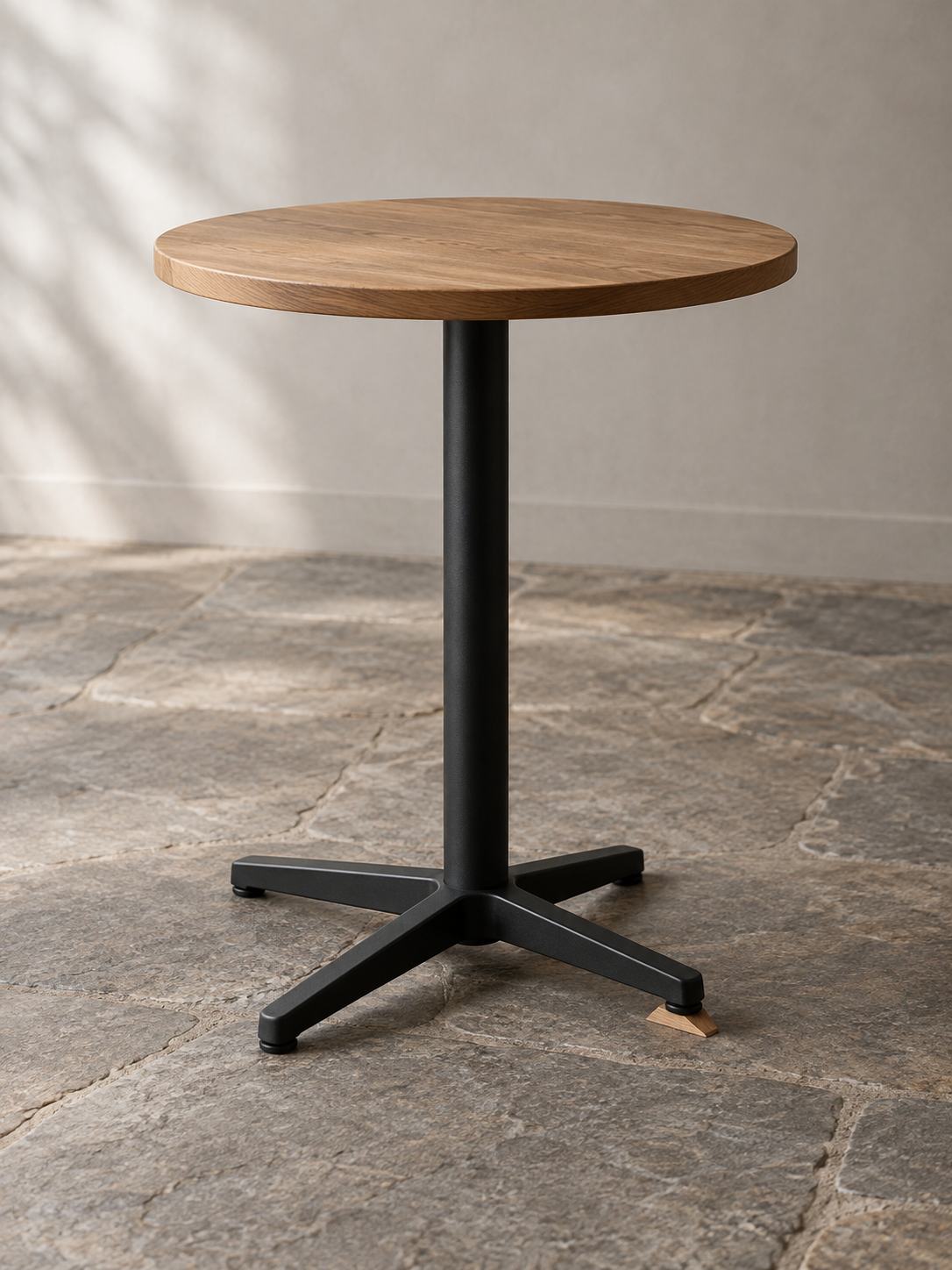
An adapter can solve an incompatibility without rebuilding either side.
When a restaurant table wobbles, the table may be sound and the floor may be sound—the two simply do not meet evenly. A small shim under one foot creates a stable interface.
The Kinetic Edge follows the same principle. We measure the mismatch between foot, shoe and surface, then create a personalized interface intended to help them work together more effectively—without forcing a prescribed gait pattern.
A measured baseline-to-installation process
Intake and footwear review
We review your history, goals, current insoles, sport or work shoes and the everyday footwear you use most.
Movement baseline
Selected standing, mobility and activity-specific tasks show how you currently organize pressure, stability and force.
Pressure and force analysis
Video and pressure data provide an objective view of contact, transfer and relevant side-to-side differences.
Edge, retest and fit
We introduce a trial setup, repeat the task, refine the configuration and carry the measured result into your custom insoles.
Before and after, measured in the same session
The comparison below illustrates the before-and-after response for one Kinetic Edge fitting. Your custom fitting is based on your own measurements and response.
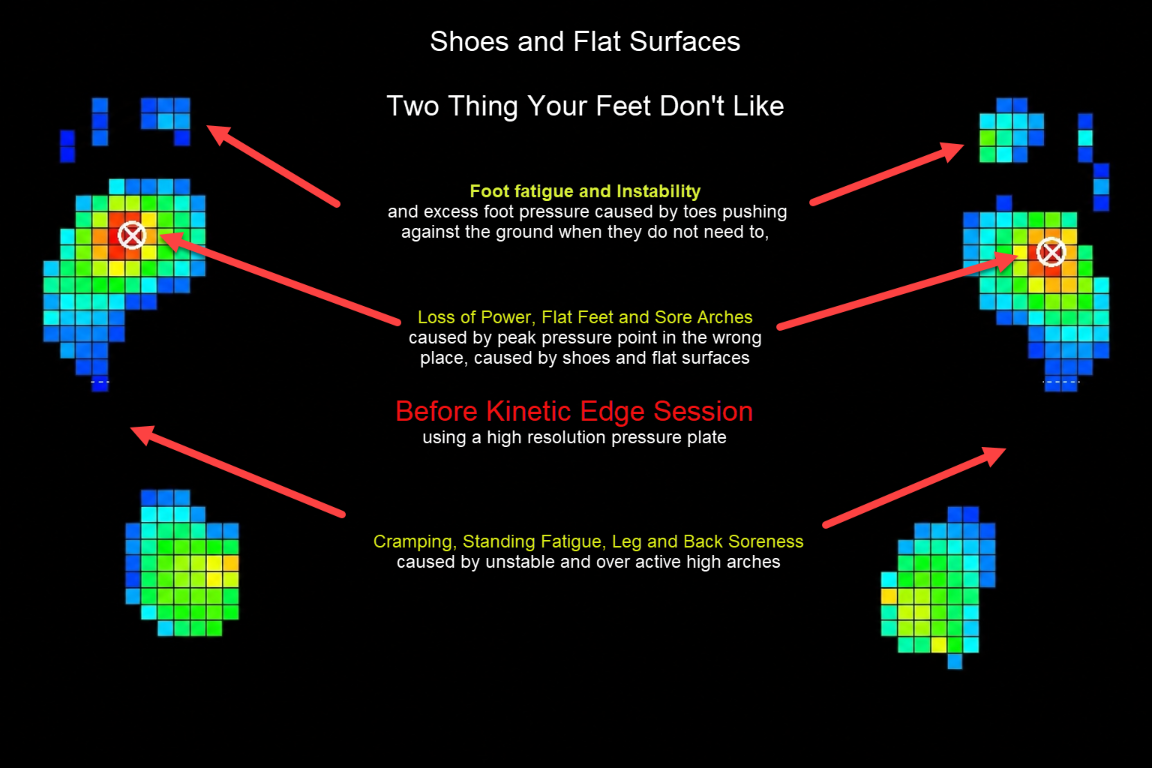
Before Kinetic Edge session
The baseline shows pressure and stability patterns before fitting.
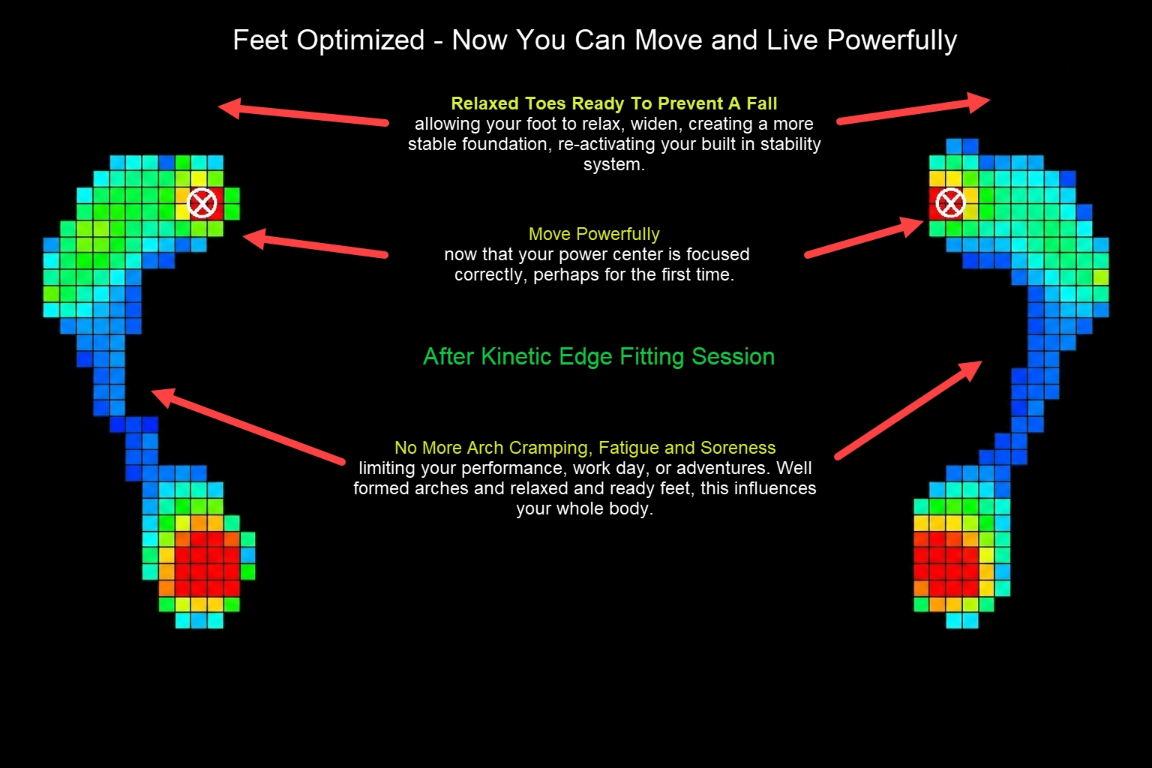
After Kinetic Edge fitting session
The updated maps show the response after the fitting.
Example client data supplied for demonstration. These graphics illustrate the assessment method and do not guarantee the same result for every client.
Where do you want the ground to help most?
The Kinetic Edge fitting is tailored to how you move and what you need from it.
A custom interface—not a plan for a single shoe.
The custom fitting connects your measurements to a practical insole plan for sport shoes, everyday footwear and other activities.
Individual baseline and retest
Your movement, pressure and force data are reviewed before and after the trial configuration.
Personalized Kinetic Edge configuration
The intervention is selected for your measured response rather than a standard correction.
Coaching and foot-strength strategy
You receive relevant movement and loading cues, plus the option to continue with Focal Point Power personal training after installation.
Footwear-specific options
Additional pairs can be produced for everyday footwear, work or other sports.
Wear monitoring
The product can incorporate indicators intended to help identify when replacement should be reviewed.
What happens next
Initial assessment and trial
We take your history, assess movement, review footwear, establish your baseline and test a preliminary configuration.
Custom fitting and installation
After an adaptation period of approximately two weeks, we review your response, confirm the configuration and install the full custom product.
Optional performance training
Once your custom insoles are installed, Focal Point Power sessions can help you train the foot, address side-to-side muscular asymmetry and improve how your posterior chain manages energy.
Focal Point Power Personal Training
Train the body to use the improved interface.
Focused sessions help you turn a more stable foot?shoe?surface relationship into stronger, more balanced movement.
Before your fitting
How is this different from a traditional orthotic assessment?
The Kinetic Edge process starts with the relationship between foot, footwear and surface. It uses baseline testing, a trial intervention and immediate retesting rather than assuming a standard correction.
What should I bring?
Bring your sport or work shoes, your most-used everyday footwear, and any current insoles or orthotics.
Will I see whether the trial configuration changes my result?
You will review the response to the trial setup during your appointment. Not every person responds in the same way, so recommendations are based on your measurements.
Can I order additional pairs?
Yes. Once your configuration is established, additional products may be produced for compatible footwear and activities.